



In a previous article we showed that Saba Closed-End Funds ETF (BATS:CEFS) outperforms other closed-end funds ETFs, like the Invesco CEF Income Composite Portfolio ETF (PCEF) and the Amplify High Income ETF (YYY).
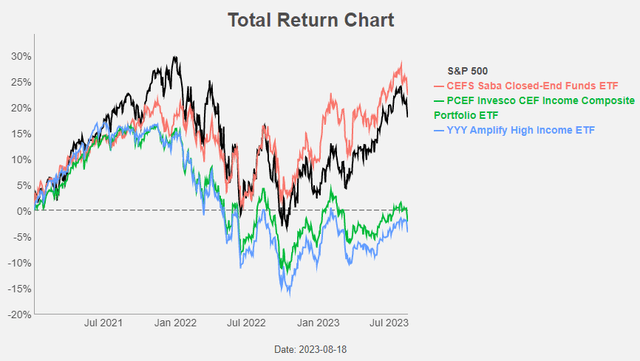
Figure 1: Total Return Chart (Radar Insights)
CEFS outperformed in both falling and rising interest rates environments, thanks to its leverage, interest rate hedging and active management. Today we focus on the active management in general and the battle with Blackrock in particular. CEFS is actively fighting to extract as much shareholder value as possible for its shareholders. This active management is paying off, and the current weakness in the share price offers a nice buying opportunity.
Closed-end Fund Arbitrage
Closed-end funds are, like their name suggests, closed-end funds, unlike ETFs, which are open end funds.
Both ETFs and CEFs are traded on an exchange, but ETFs trade always close to their net asset value, while closed-end funds can trade at a discount or a premium to their NAV.
CEFs are mostly actively managed, while ETFs are often passively benchmarked.
Another difference is the use of leverage, which is common among CEFs, but not really among ETFs.
The Saba Closed-End Funds ETF seeks to generate high income by investing in closed-end funds trading at a discount to net asset value. The portfolio managers use an investment process that combines fundamental analysis, quantitative analysis and proprietary screening tools. Those screens dynamically rank closed-end funds across a variety of factors including yield, discount to NAV and the quality of the underlying securities. The managers actively try to capture the widening and narrowing of discounts to net asset value.
CEFS may also invest in CEFs that are (or the portfolio managers believe may become) the subject of an activist campaign by a shareholder whose aim is to eliminate or reduce the discount to the NAV. One way to reduce the discount to NAV is to switch the closed-end fund to an open end fund: closed-end fund arbitrage. Open end funds always trade at NAV, and by switching a closed-end fund that trades at a discount to an open end fund eliminates in one go the discount to NAV. This is exactly what Boaz Weinstein, CEFS’ famous portfolio manager, tries to achieve with a number of closed-end funds of Blackrock.
Battle with Blackrock
Boaz Weinstein is taking up a fight against BlackRock over a number of closed-end funds CEFS invests in. It concerns the BlackRock Innovation and Growth Term Trust (BIGZ), BlackRock Capital Allocation Term Trust (BCAT), BlackRock California Municipal Income Trust (BFZ) and BlackRock ESG Capital Allocation Term Trust (ECAT). All four are part of the Top 10 holdings of CEFS and together account for almost 35% of the portfolio.
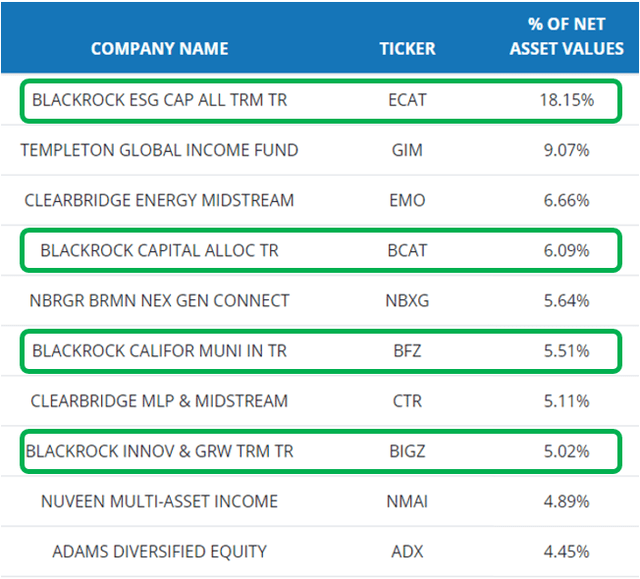
Figure 2: Top 10 holdings (Saba Capital Management)
Weinstein is pressing BlackRock to switch the closed-end funds to open end funds. The funds are trading at a discount to net asset value between 10 and 15%. If Weinstein succeeds to get what he wants, he and the CEFS shareholders will pocket a nice gain! The discount to NAV of the targeted Blackrock funds is already shrinking and is currently lower than their 52-week average.
According to Blackrock, Weinstein’s activist campaign seeks “seeking to force tender offers, open-endings or liquidations to enrich itself at the expense of other shareholders”.
It’s not entirely clear to us how an immediate gain between 10 and 20% would be detrimental to the other shareholders in the Blackrock closed-end funds.
Saba Closed-End Funds ETF
Like we said before, CEFS seeks to generate high income by investing in closed-end funds trading at a discount to net asset value. Currently, the average discount to NAV of the portfolio is 13.5%. The leverage decreased a bit and stands now at 22%.
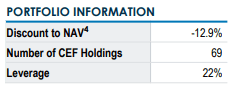
Figure 3: Portfolio information (Saba Capital Management)
The investments in CEFs are more or less evenly split between equities and bonds. The equity weight increased slightly the past few months.
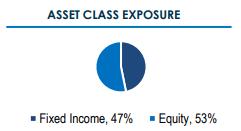
Figure 4: Asset class exposure (Saba Capital Management)
The expense ratio of CEFS is 2.42%. Closed-end funds use leverage, and this results of course in higher costs. All three closed-end fund ETFs have expense ratios between 2 and 3%.
Unlike PCEF and YYY, CEFS is outperforming the S&P 500.
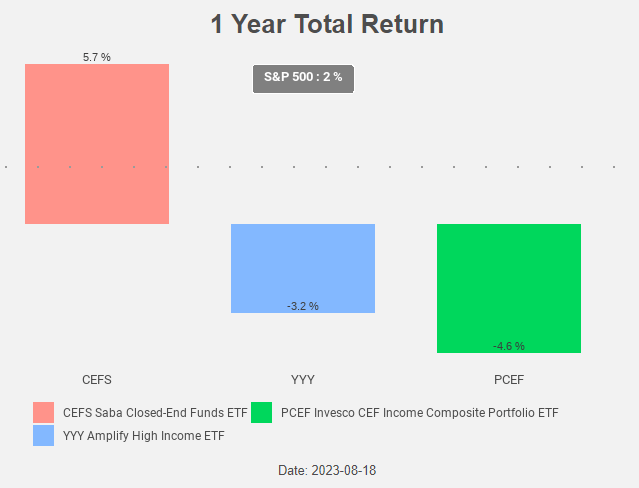
Figure 5: Total Return Chart (Radar Insights)
It comes as no surprise to us CEFS is not in a long term downtrend, while PCEF and YYY are.
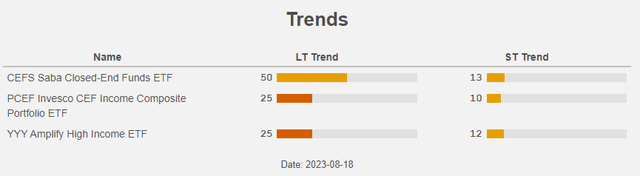
Figure 6: Trends (Radar Insights)
All three funds are a bit oversold in the short term, so it’s a good moment to pick up some shares of CEFs. We continue to avoid PCEF and YYY.
Conclusion
Closed-end fund ETFs can give investor a diversified access to the closed-end fund universe and its special features like the possibility of trading with a premium or a discount to NAV and the use of leverage. Those features can help in providing both capital appreciation and high dividend income.
Income oriented investors should buy the dip in CEFS (and its 10.37% dividend yield) and keep their fingers crossed for a positive outcome in the ongoing battle with Blackrock.
Read the full article here