


By Paul Wightman
At a Glance
- The Renewable Energy Directive (RED III) raises the overall renewable energy target to 42.5% by 2030, up from 32% under RED II
- Higher feedstock volumes are likely needed for sectors like aviation, where demand looks set to rise
A supply shortage in feedstocks used to produce cleaner road, rail and air transportation fuel could be exacerbated in the European Union (EU), one of the world’s largest markets for biofuels, by growing demand stoked in large part by stricter environmental policies in the region.
The mandated demand for renewables under the latest iteration of the Renewable Energy Directive (RED III) necessitates the production of advanced products such as renewable diesel, as this updated directive enables suppliers to blend beyond the existing B7 limits*. A similar situation is occurring for sustainable aviation fuel, where a growing share of jet fuel sales must be made from renewable sources. This continued increase in demand for renewables across all transport sectors, spearheaded by biofuels, is creating a feedstock supply crunch.
As hydrotreating biofuel producers look to gather the materials needed to meet this demand, many are chasing high-cost waste and residue feedstocks compared to the cheaper crop-based alternatives. This supply tightness is most evident in the more advanced transport fuels, such as sustainable aviation fuel or renewable diesel, as producers turn to many of the same feedstocks. Prices for these feedstocks have risen sharply in the past couple of years or so, according to industry analysts.
The uncertainty over feedstock supply, which is likely to put further pressure on biofuel profit margins, combined with goals to decarbonize are elevating price volatility, could lead to potentially higher volumes in Soybean Oil futures and options at CME Group and other related products.
The latest Argus Media report shows that total European biofuel consumption is expected to reach around 30.6 billion liters in 2025, up 10% from 2024. RED III, the cornerstone of the EU’s environmental policies for biofuels, sets a renewable energy target of 42% by 2030. For the first time, there is a specific blend target for Renewable Fuels from Non-Biological Origin (RFNBO), which includes the use of renewable hydrogen and e-fuels. In the transportation sector, it sets a target of 29% for renewable energy and a 14.5% reduction in greenhouse gas (GHG) intensity. The overall energy target under RED III has increased from 32% to 42.5% compared with RED II, but the target date for implementation has remained at 2030.
Soybean Oil Futures: A Go-To Hub for Bio Markets
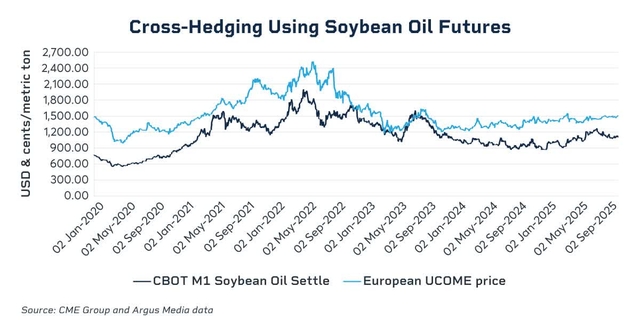
There are a range of feedstocks used in the European biofuels markets, but none of them offer the same degree of depth of trading book and liquidity as CME Group futures and options on Soybean Oil, traders say. Companies producing biofuels from alternative streams such as wastes or animal fats rely on highly liquid Soybean Oil futures to cross-hedge their price exposure – the price of Used Cooking Oil Methyl Esther (UCOME), which is made from waste feedstocks, is highly correlated with the price of Soybean Oil futures, which are based on an underlying primary vegetable oil feedstock. Used cooking oil is the leading waste feed in terms of trade and standardization, meaning it has become a popular feedstock choice for biofuel producers.
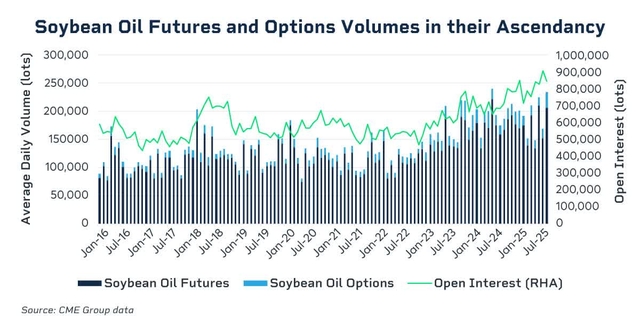
The average daily volume of the Soybean Oil futures contract in the 12 months to September 2025 was over 180,000 contracts per day, up around 9.5% from a year earlier. Open interest, a key measure of the trading interest in a market, is also at multi-year highs. There is also an active options market, where around 15% of the equivalent daily futures volumes are traded.
Additionally, the exchange has seen a rise in the volumes traded from firms outside of the U.S. market. The latest exchange data shows that the total percentage of firms based in Europe trading Soybean Oil futures has reached around 25%, with Asian firms accounting for around 10%. The percentage of European firms has increased from around 20% in 2024 alongside similar gains for Asia.
Feedstock Tightness by 2028?
The feedstock markets appear primed for a period of structural transformation as expanding mandates and stricter sustainability criteria drive a shift toward domestically produced and waste feedstocks. At the same time, some crop-based feedstocks are being phased out, placing further emphasis on rapeseed oil, used cooking oil and other waste feedstocks to meet the expanding needs from the aviation and maritime sectors.
Renewable diesel demand is also increasing from the heavy-duty vehicle (HDV) sector on the back of an ambitious biofuels blending program. It appears as if the feedstock markets could experience further periods of tightness, creating higher levels of price volatility, which will need to be managed via the financial markets, analysts have suggested.
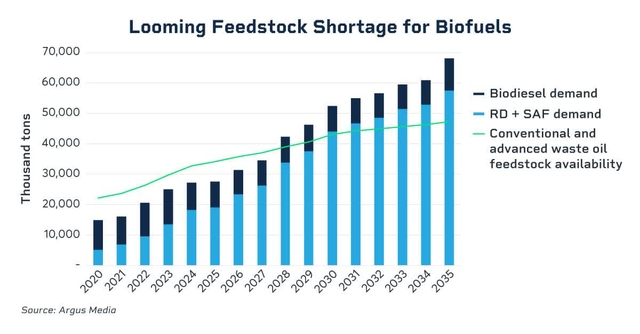
The chart below illustrates the availability of conventional and advanced waste oils (UCO, tallow, etc.) and compares it to the global demand from all of the relevant sectors. Based on the data, Argus Media expects used cooking oil availability to tighten as consumption in Asia’s domestic markets continues to grow. Without any new feedstock sources or a sizable uplift in UCO collections, tightness is expected by 2028-2030.
The New Decarbonization Push
ReFuelEU Aviation and ReFuelEU Maritime are the two latest EU directives to support further decarbonization of both the aviation and maritime sectors. The demand from both sectors appears to be gathering pace, albeit from a low base. Regulators have put higher blending mandates in place for these sectors, which should see much higher usage of biofuels going forward. Currently, the supply of products like sustainable aviation fuel is small, at about 2% of the total jet fuel market, but this is expected to ramp up quickly to reach an estimated 70% by 2050. This, combined with renewable diesel, is expected to place significant pressure on the feedstock availability.
Argus Media estimates that Europe’s renewable diesel and sustainable aviation fuel capacity will reach 6.3 million metric tons (MMT) in 2025, with a further 0.7 MMT under construction. Sustainable aviation fuel capacity in Europe is expected to reach 2.4 MMT in 2025, up 17% from 2024. Renewable diesel capacity is set to reach around 4.5 MMT in 2025, a 16% increase on the 2024 volumes. However, demand for both products is also set to increase, with Argus suggesting this could reach around 6.3 MMT in 2025.
This is all expected to tighten the feedstock markets, with Argus Media estimates showing that conventional and waste-oil feedstock availability in 2030 could reach around 43 MMT. This supply will likely be surpassed by the demand for renewable diesel, sustainable aviation fuel and biodiesel demand in the same year.
Sustainable Aviation Demand to Boost Interest in Ethanol
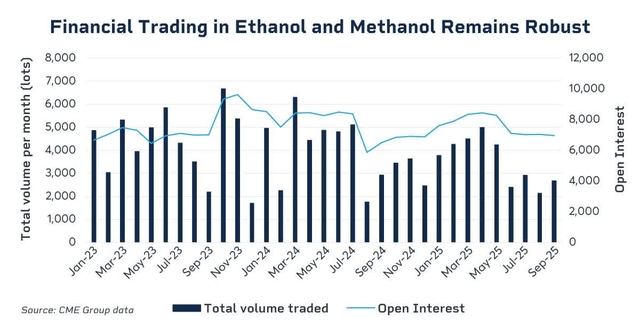
Ethanol remains a key biofuel feedstock in the European markets. The blending mandates laid out by each member government have been increasing since 2009 through the introduction of the different iterations of the Renewable Energy Directive. The current blending rate of 10%, based on limits due to engine specifications, remains the benchmark for European gasoline across much of northwest Europe.
The principal production pathway for sustainable aviation fuel involves the hydroprocessing of esters and fatty acids (HEFA), which are blended with conventional jet fuel and fit well with the demand for waste oils and animal fats. This is a well-established production pathway that complements newer technologies such as alcohol-to-jet (ATJ), which is likely to involve higher volumes of ethanol in the coming years as demand for more sustainable fuels for aviation increases.
The technology to convert ethanol to jet fuel remains relatively new. This is expected to become more common in the run-up to 2030 and beyond, and there are currently 15 production facilities announced as of 2025.
Looking Ahead
A more environmentally conscious approach to bioenergy supply is likely to place further pressures on the lower-carbon and higher-greenhouse-gas feedstock supply chains. Higher volumes of waste feedstocks, greases and animal fats from regions like Southeast Asia, the Middle East and the U.S. are already being introduced into the biofuels supply chain in greater quantities, replacing palm and soybean oil. This has seen competitive pressures placed on the domestic EU biofuels industry, with alternative supplies being more readily available from outside the EU-27 member states.
The introduction of more advanced biofuels, through existing regulations, is likely to have a significant impact across the biofuels markets as blenders hunt for the feedstocks with the lowest carbon intensity to meet ever stringent mandates. Sustainable aviation fuels and alternative marine fuels are expected to be big consumers of advanced feedstocks in the coming years as the blending mandates increase from the current levels. It remains to be seen what impact this will have on prices, but a period of volatility ahead looks ever more likely, making risk management an important consideration in the years ahead.
*Biodiesel is currently limited by the B7 blendwall meaning that the overall blend includes 7% biofuels.
Original Post
Editor’s Note: The summary bullets for this article were chosen by Seeking Alpha editors.
Read the full article here